


Montenegro
8 days · Hiking
From the Bay of Kotor to Lake Skadar – Historical trade and military trails
▲▲▲▲▲Moderate
Walking · Hiking · Cycling · Montenegro
Walking, hiking and cycling holidays in Stari Bar, self-guided or with a local guide. Stari Bar is an abandoned fortified town on the Londša hill above the Adriatic, holding the ruins of some 240 buildings across roughly 4.5 hectares. Ottoman gunpowder explosions in 1881 and 1912 and the 1979 earthquake emptied it, leaving citadel, city gates, aqueduct arches and a cathedral shell to explore on foot. Three kilometres inland from modern Bar, it pairs a walkable archaeological site with a 2,000-year-old olive tree nearby, both reached in a morning.
Why Stari Bar
We've spent years walking, hiking and cycling across Stari Bar in every season. The trips below are built around the routes that work — the quiet ones, the beautiful ones, the ones with great food at the end of the day.
If none of them quite fit, get in touch. We'll happily build you a private version, shaped around your interests, fitness and pace.
How we travel here
Walking
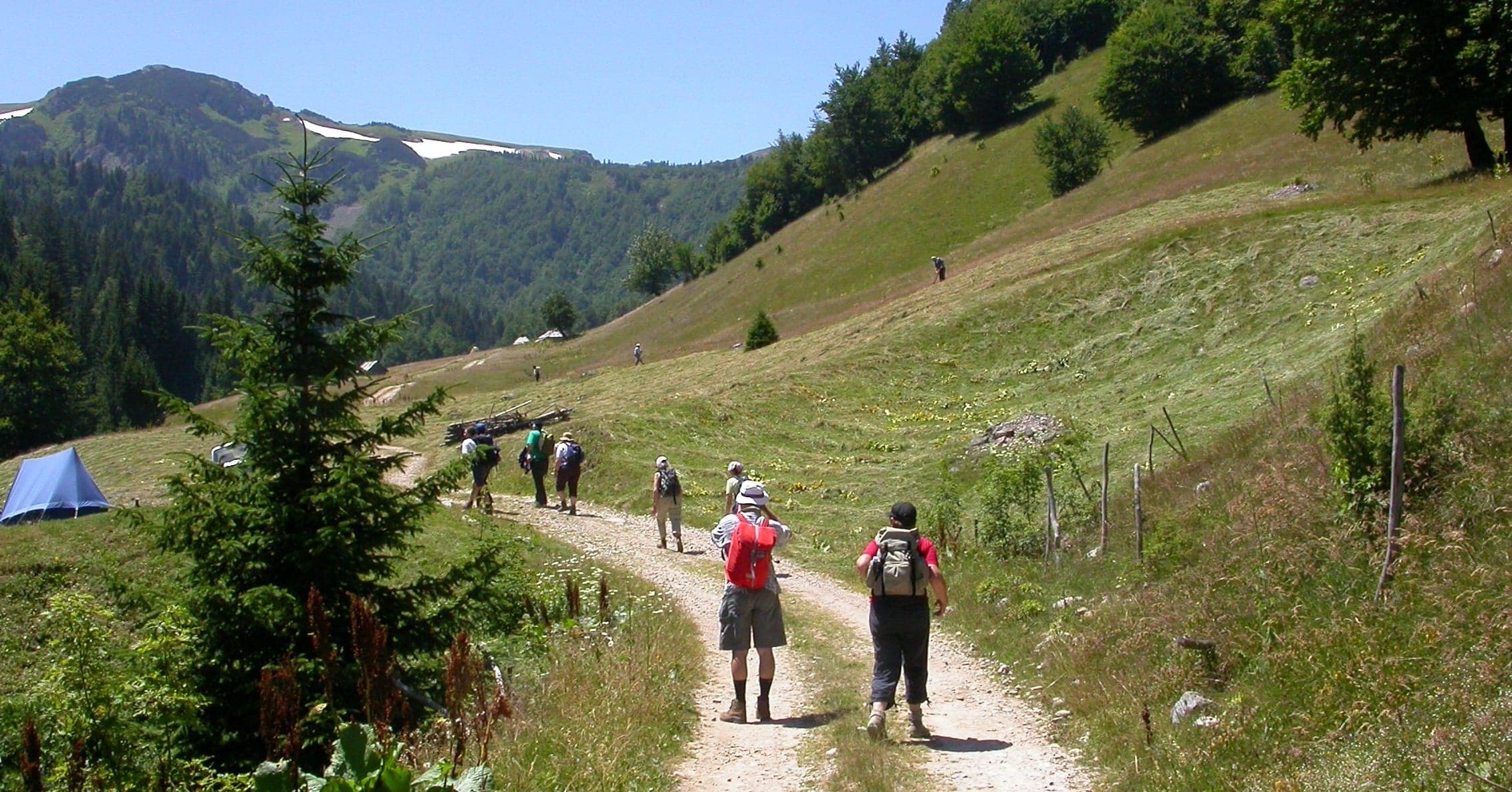
Coastal trails, village paths and slow days on foot, with time to stop.
Hiking
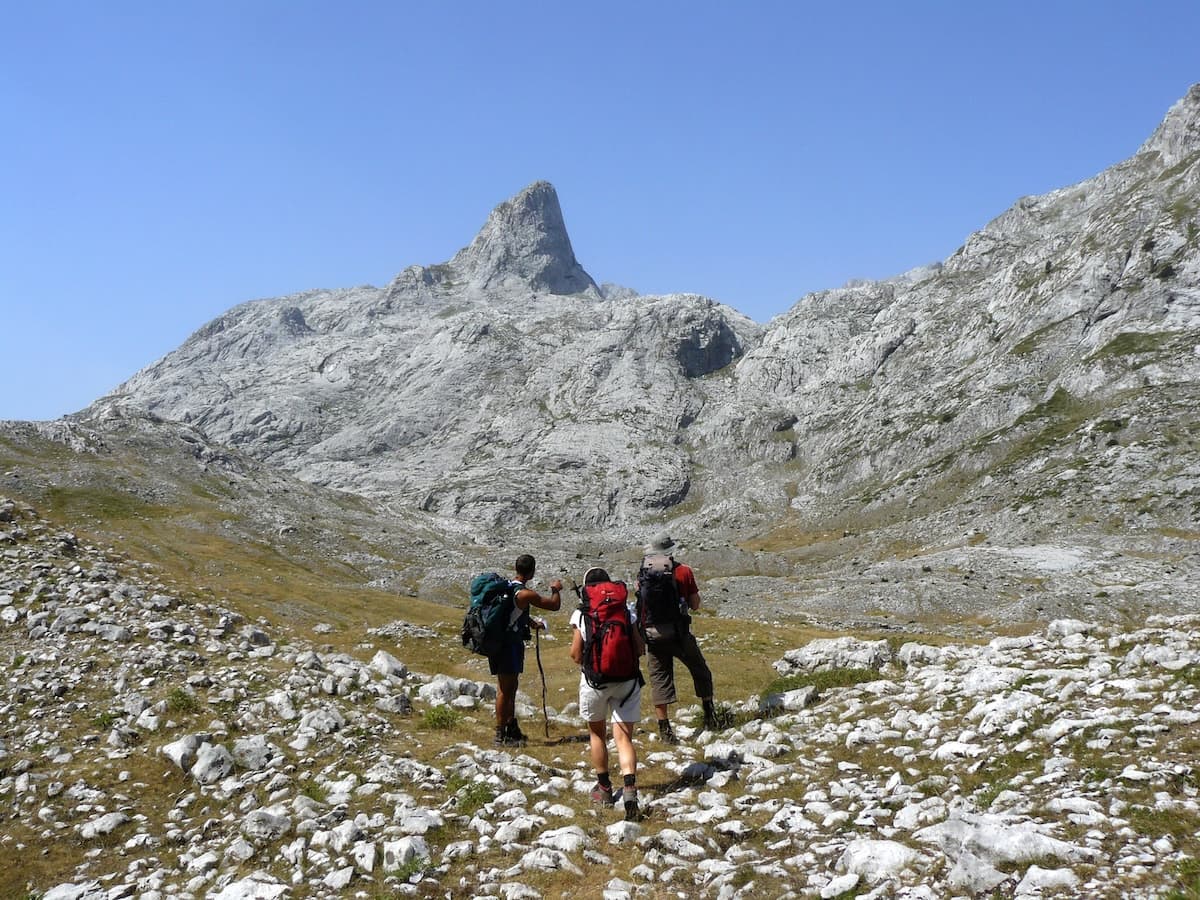
Mountain trails, hut-to-hut days and summit walks, graded honestly.
Cycling
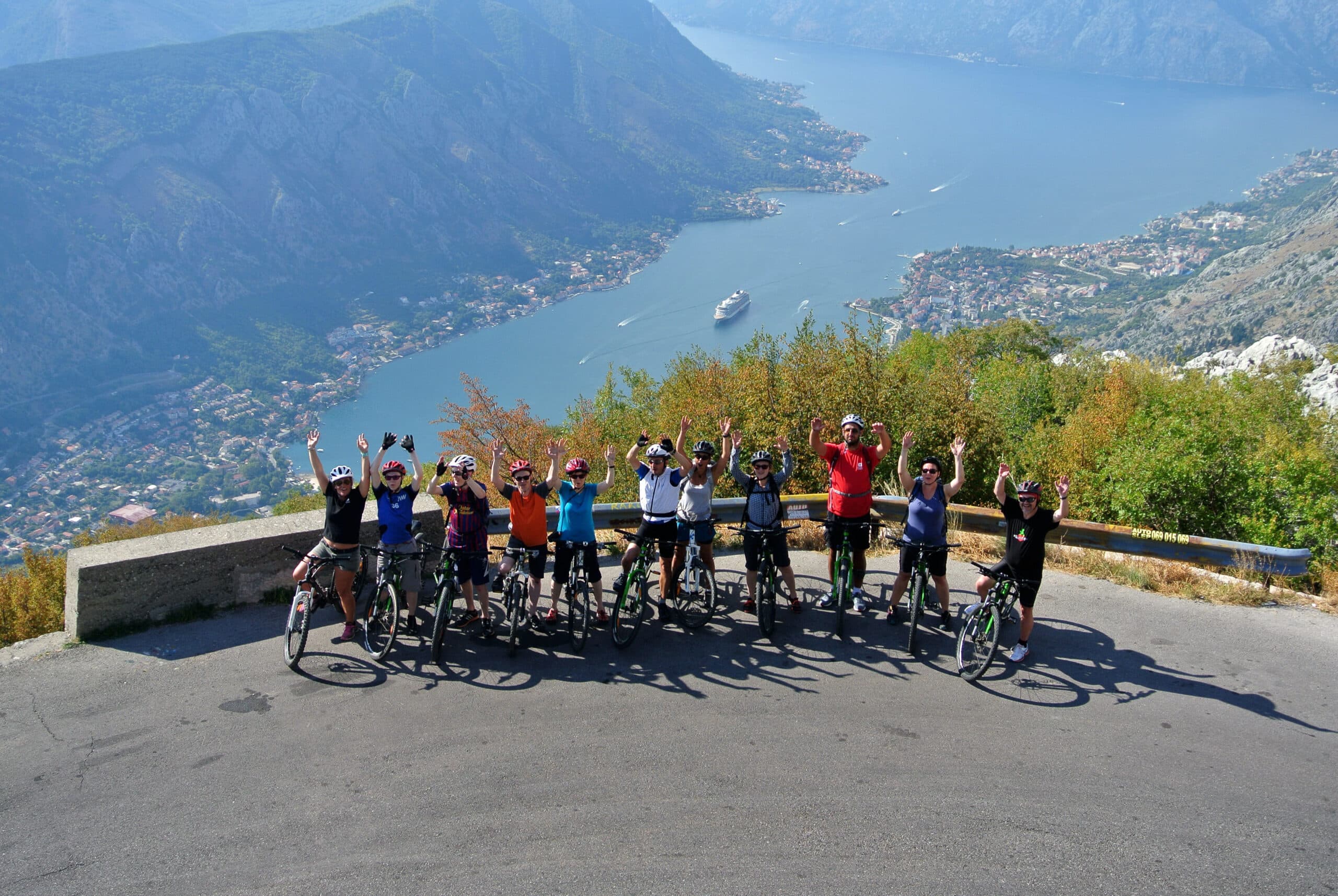
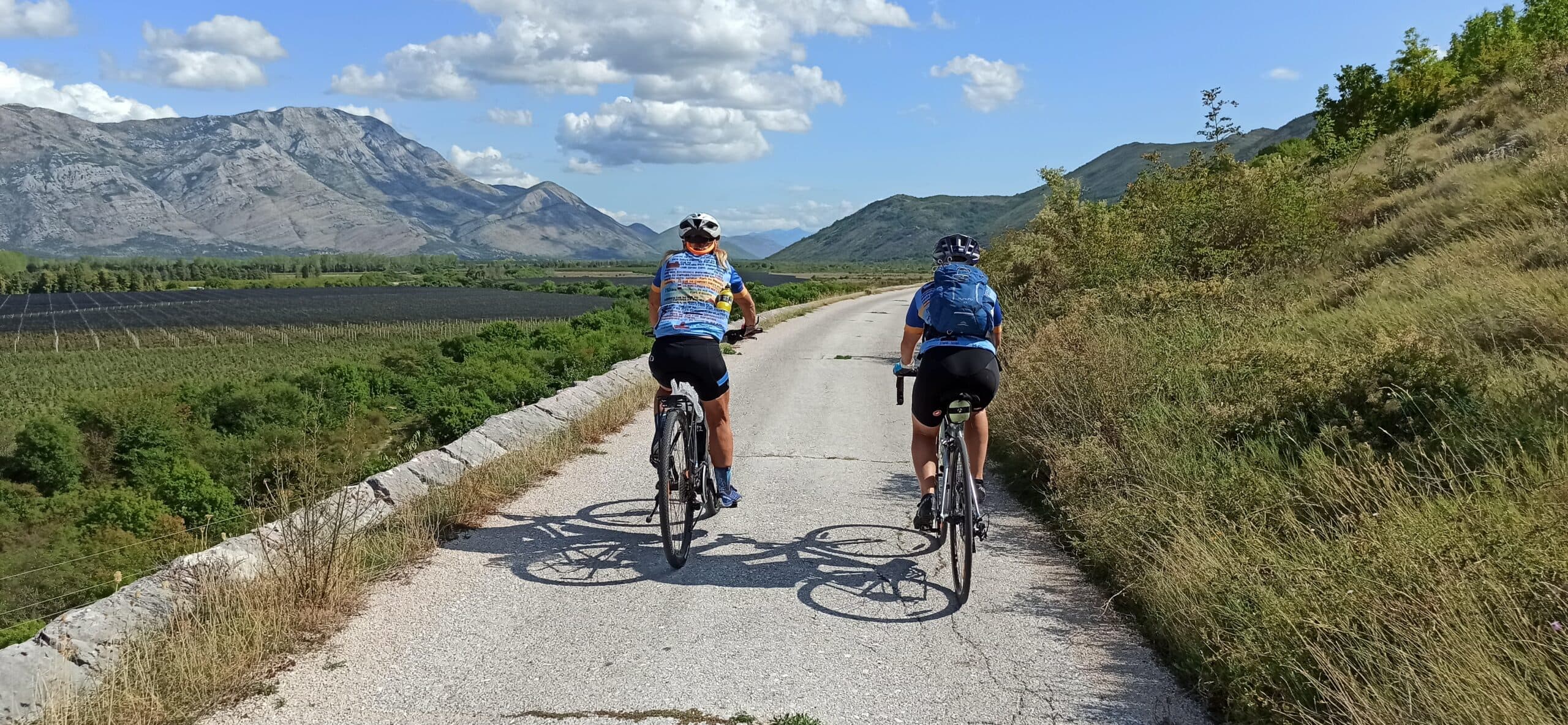
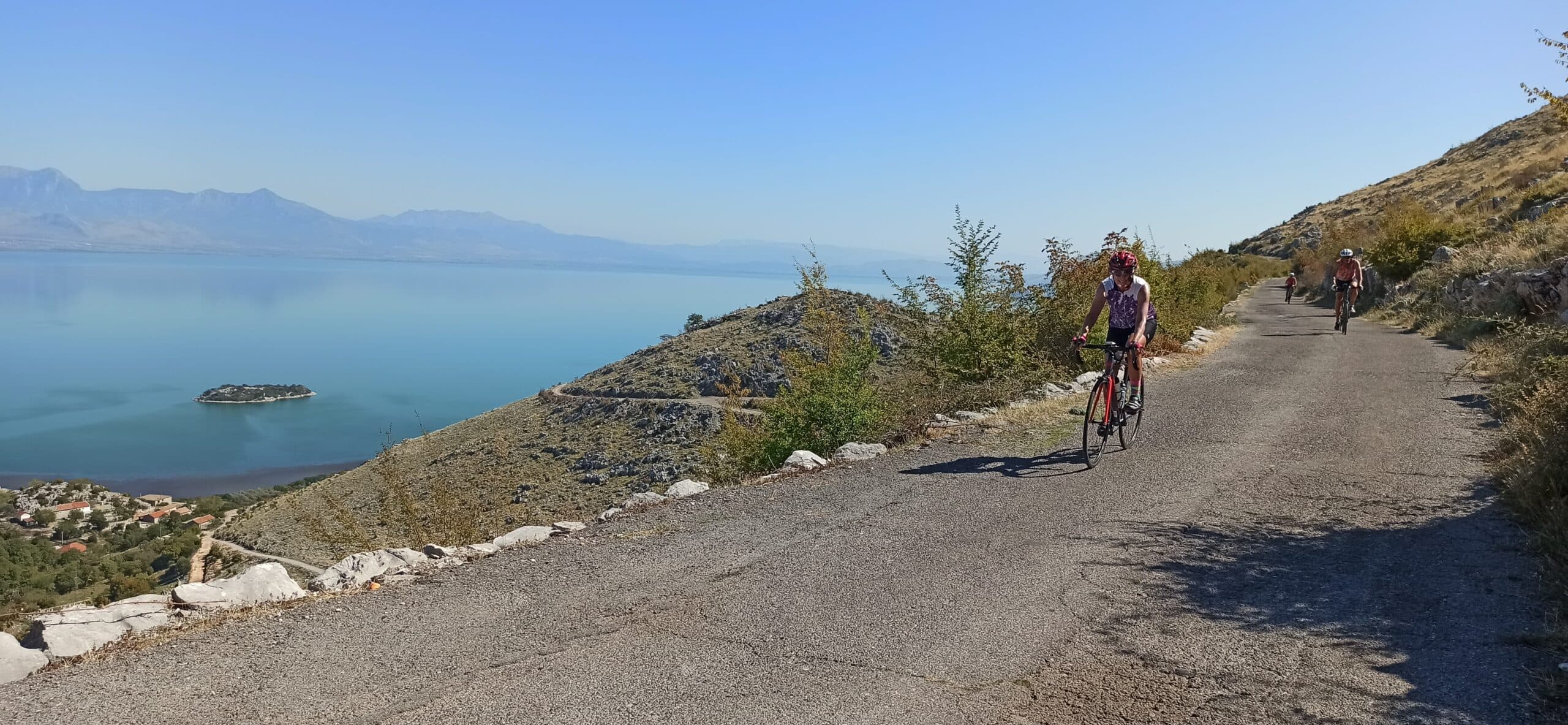
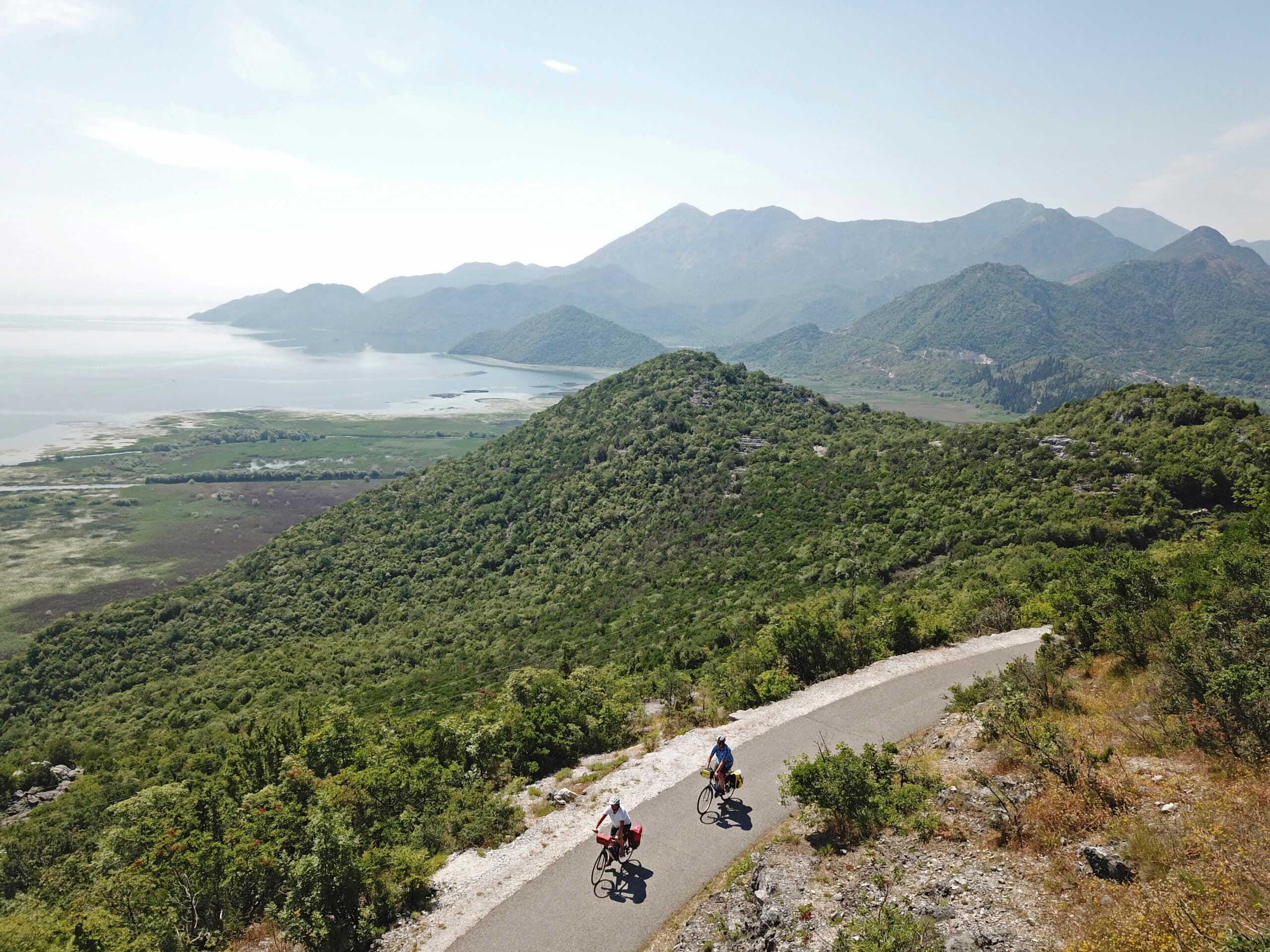
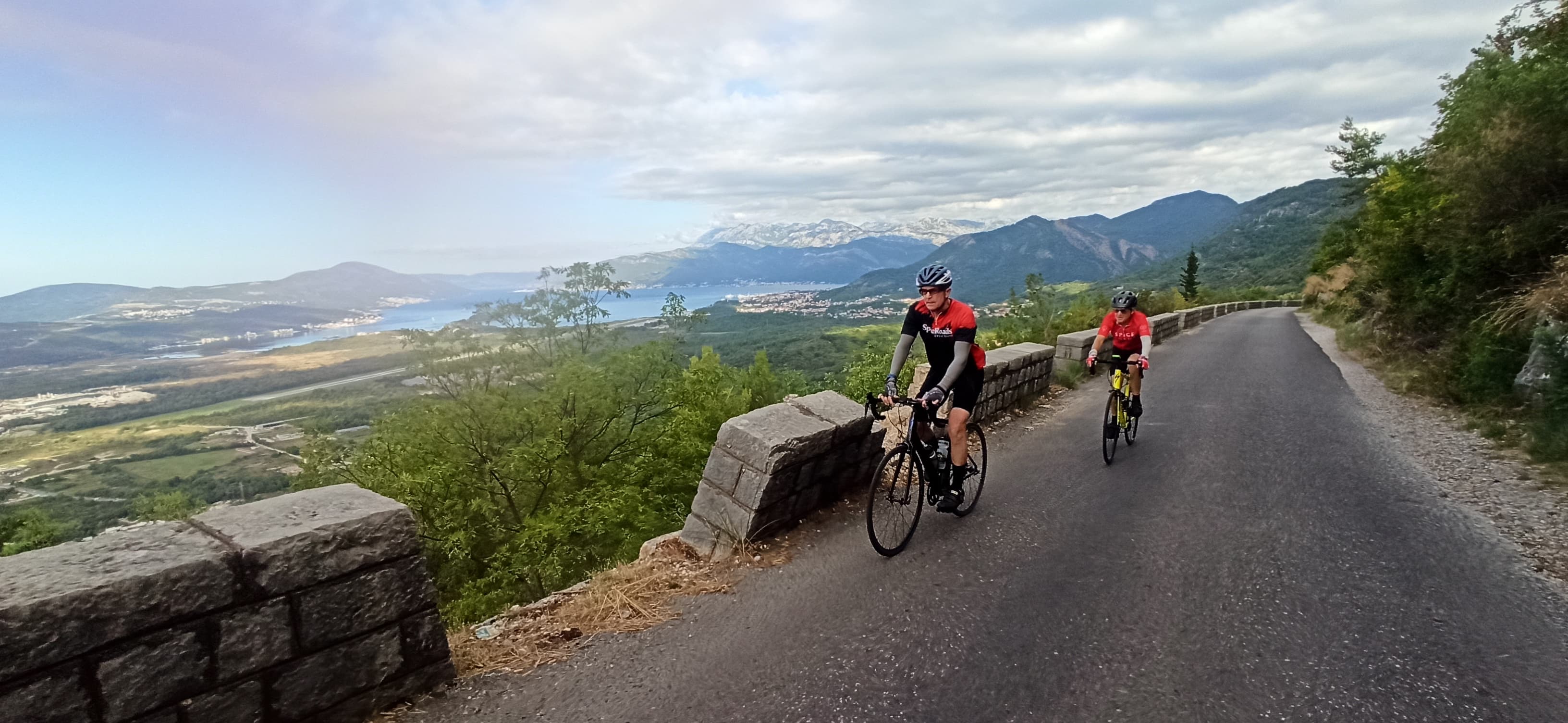
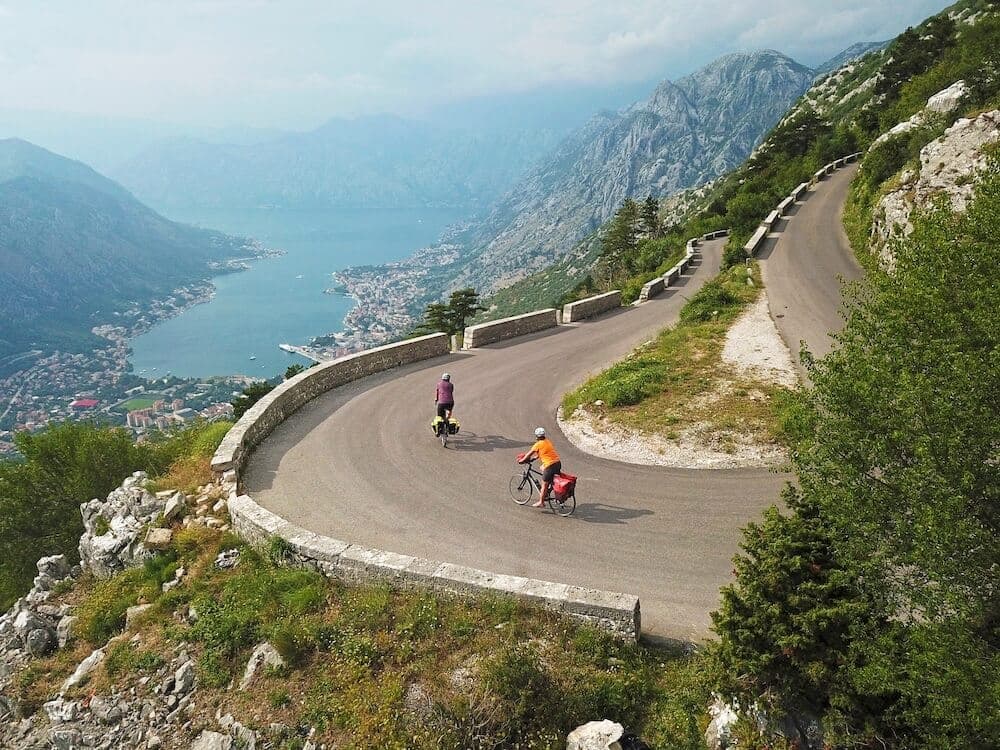
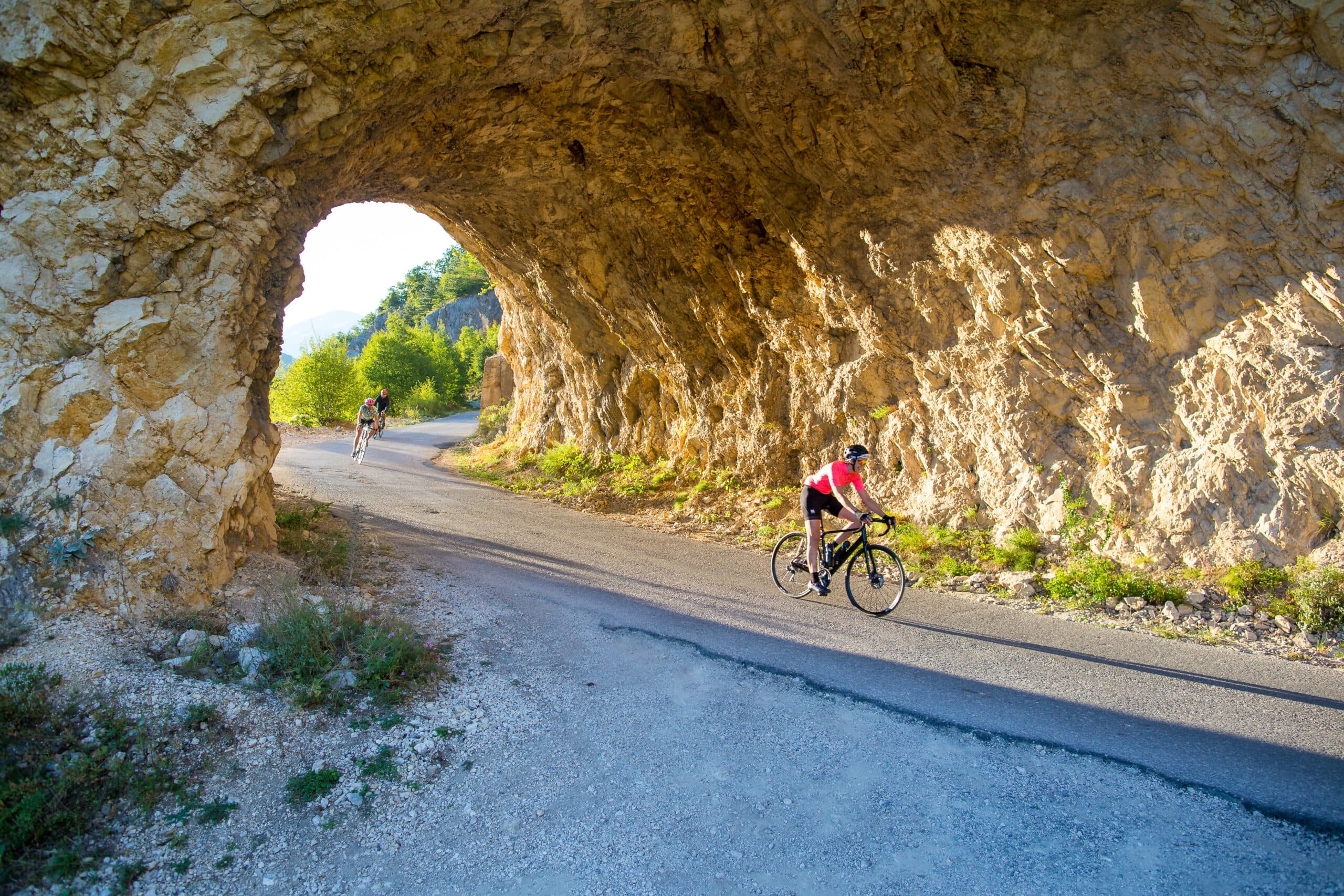
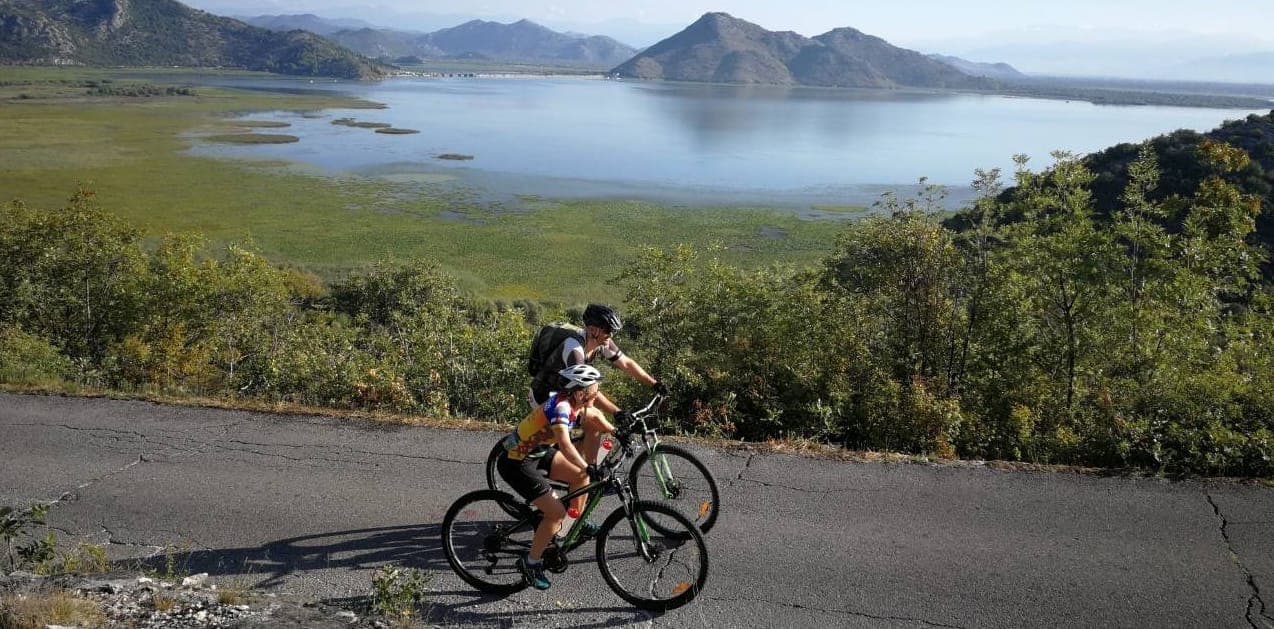
Quiet back roads and gravel routes — road, gravel and e-bike, with luggage moved between stays.
Travel guide
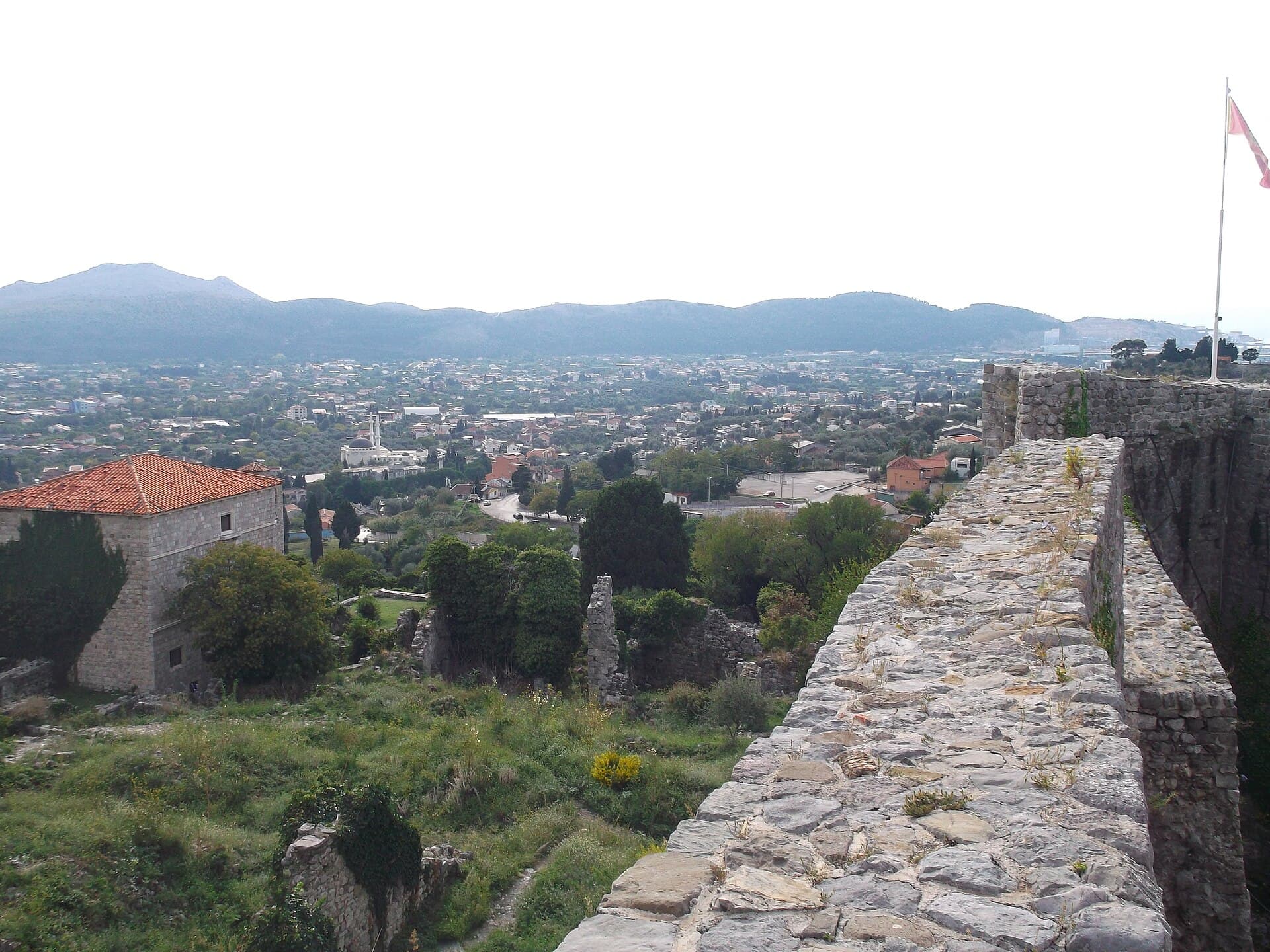
The Old Town of Bar (Stari Grad Bar) sits on the UNESCO World Heritage Tentative List as a medieval archaeological site; it is a candidate, not yet inscribed. The town stands at 184 m on Londša hill, three kilometres inland from the new city of Bar and at the foot of Mount Rumija, whose summit reaches 1,594 m with a prominence of 1,500 m. Sources give the site as 4 to 4.5 hectares, holding remains of some 240 notable structures (around 600 counting all fragments): houses, churches, mosques, palaces, bathhouses and shops within walls climbing to a summit fortress. First recorded in the 9th century under Byzantium, known to Mediterranean powers as Antivari, the town was largely autonomous from the 11th to 15th centuries, held by Venice (1443–1571), then the Ottomans (1571–1878). A Montenegrin siege in 1878, gunpowder explosions in 1881 and 1912, and the April 1979 earthquake led to its abandonment.
Сергей Наруков · CC BY 3.0 · Wikimedia Commons
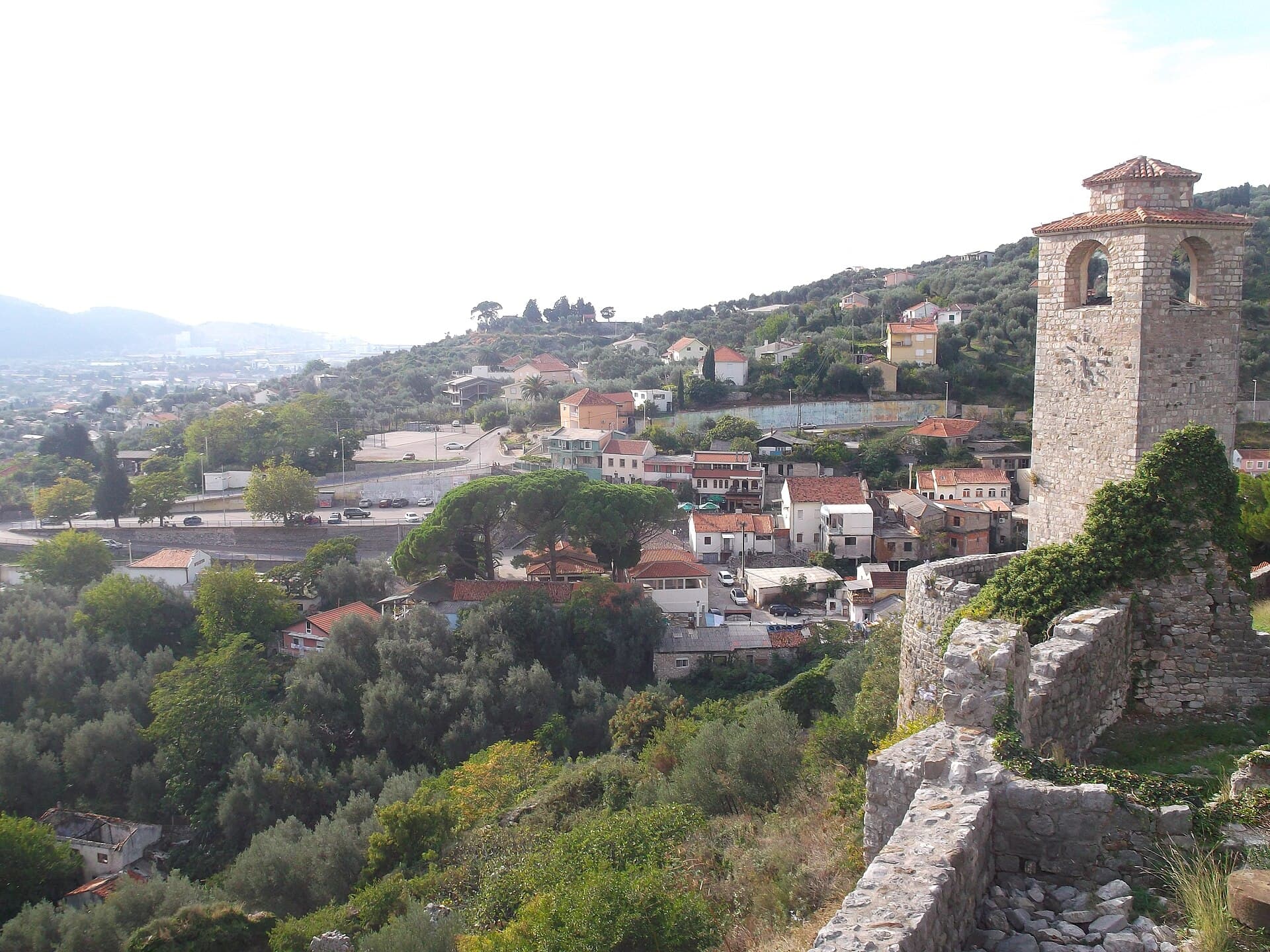
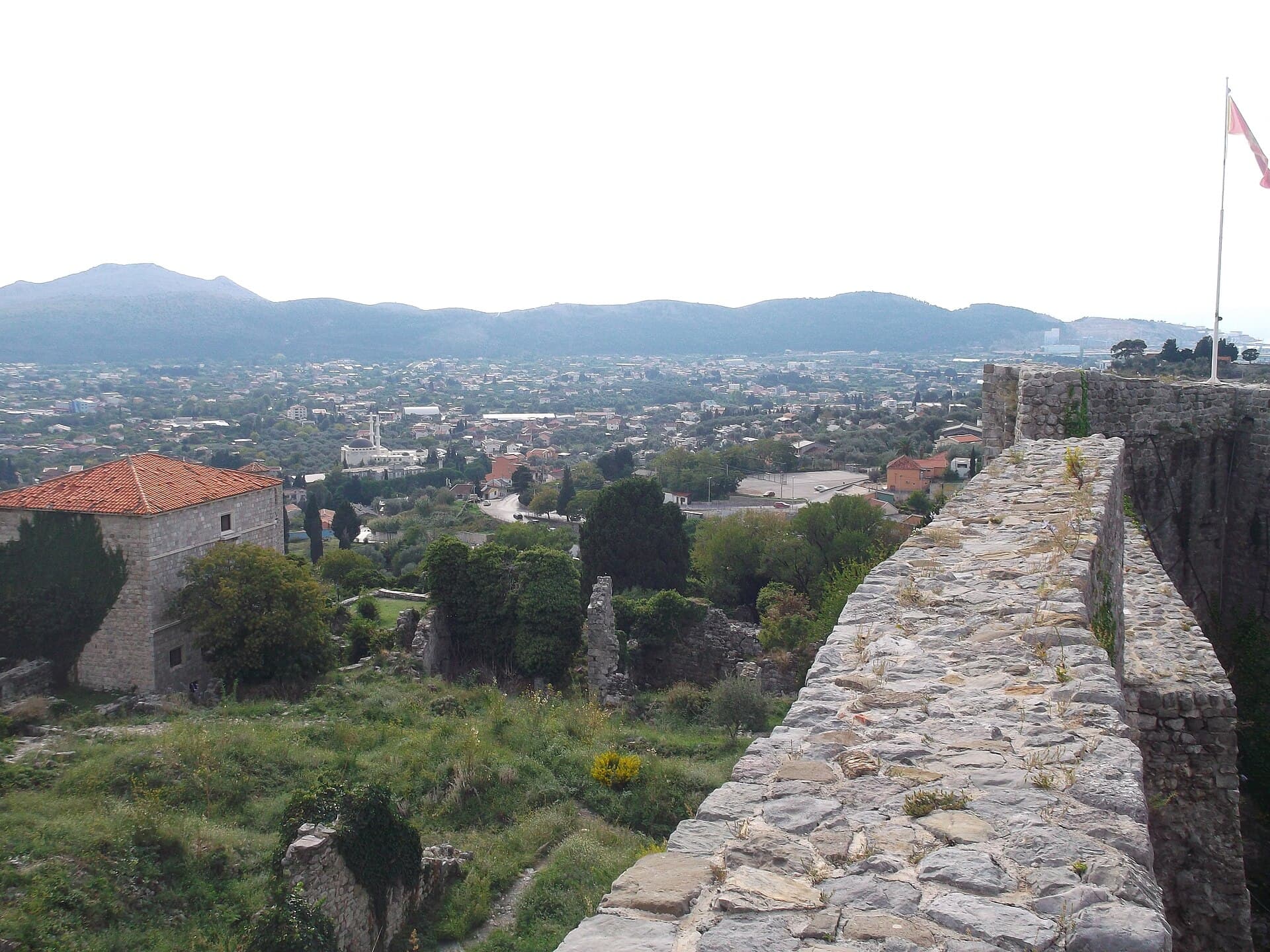
The site occupies 4 to 4.5 hectares and holds the remains of around 240 notable buildings, with roughly 600 fragments counted across the whole area. Walls climb the hillside to a fortress at the summit. Standing features include the Citadel, several city gates, the remains of the Cathedral of St George and fragments of other churches. A 17th-century Turkish hammam, the Clock Tower and a Lapidarium have been restored. On the northern side, 4 km north of new Bar, the Bar Aqueduct is the only remaining aqueduct in Montenegro and one of the best preserved of three in the former Yugoslavia; built under the Ottomans in the 16th century, it carried spring water from Mount Rumija, and a few of its 17 arches survive after post-earthquake restoration. Allow a couple of hours to walk the streets and reach the summit fortress; the ground is uneven stone throughout.
Сергей Наруков · CC BY 3.0 · Wikimedia Commons
Stari Bar is walked rather than driven: the site is car-free, and reaching the summit fortress means climbing worn stone paths and stairways from the entrance at 184 m. Sturdy shoes matter, as surfaces are broken and steep in places. The town sits at the foot of Mount Rumija, the southernmost mountain in Montenegro, whose highest point is 1,594 m with a prominence of 1,500 m, making it a serious objective on its own. Lake Skadar lies on the far side of the Rumija ridge. The 2,000-year-old Stara Maslina olive tree at Mirovica, on the fifth kilometre of the Bar–Ulcinj road, is a short, easy add-on walk.
Сергей Наруков · CC BY 3.0 · Wikimedia Commons
Stari Bar lies three kilometres inland from new Bar (guides cite 3–5 km). From Bar port it is a short drive, reported at around five minutes; one visitor paid roughly €15 by taxi each way. Podgorica Airport (TGD) is about 31 miles / 30.8 miles by road, a 54-minute drive. Tivat Airport (TIV) is 44 miles from Bar, 35.8 miles by road. By train, Podgorica Airport to Stari Bar takes about 56 minutes and costs $5–$11; Bar is the coastal terminus of the Belgrade–Bar railway. A direct bus runs from Tivat to Bar's Polje bus station twice daily, taking about 2h 13m. From new Bar, local transport or taxi covers the final stretch uphill to the site entrance.
Сергей Наруков · CC BY 3.0 · Wikimedia Commons
Admission has risen over the years: earlier accounts cite €2, adult entry was €4 in August 2024, and 2025–2026 listings give €5. In summer the gate is open every day from 08:00 to 20:00; in winter from 09:00 to 17:00. Entry to the Stara Maslina olive tree at Mirovica is reported at €1. The exposed hillside and stone surfaces make midsummer midday hot; earlier mornings or the late afternoon before the 20:00 close are more comfortable for the climb to the fortress. Spring and autumn suit walking the site and the wider Rumija foothills. Confirm current pricing and hours locally before travelling, as figures have changed year to year.
Our journeys
21 journeys planned by our team in Podgorica — from gentle coastal weeks to high-mountain crossings.
Build your own trip →8 days · Hiking
7 days · Hiking
8 days · Cycling
7 days · Cycling
8 days · Cycling
8 days · Hiking
8 days · Cycling
7 days · Cycling
7 days · Hiking
1 day · Cycling
1 day · Cycling
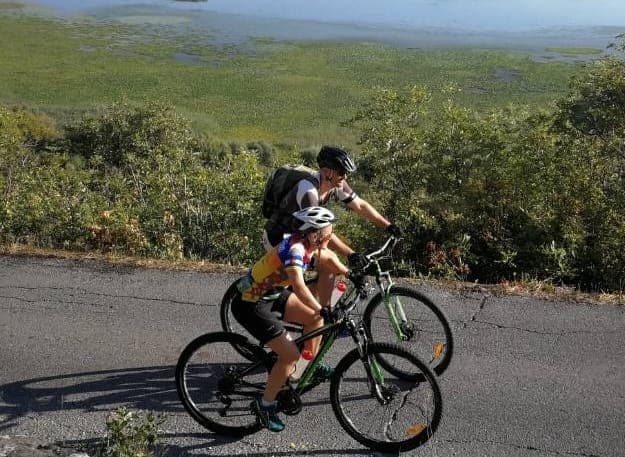
1 day · Cycling
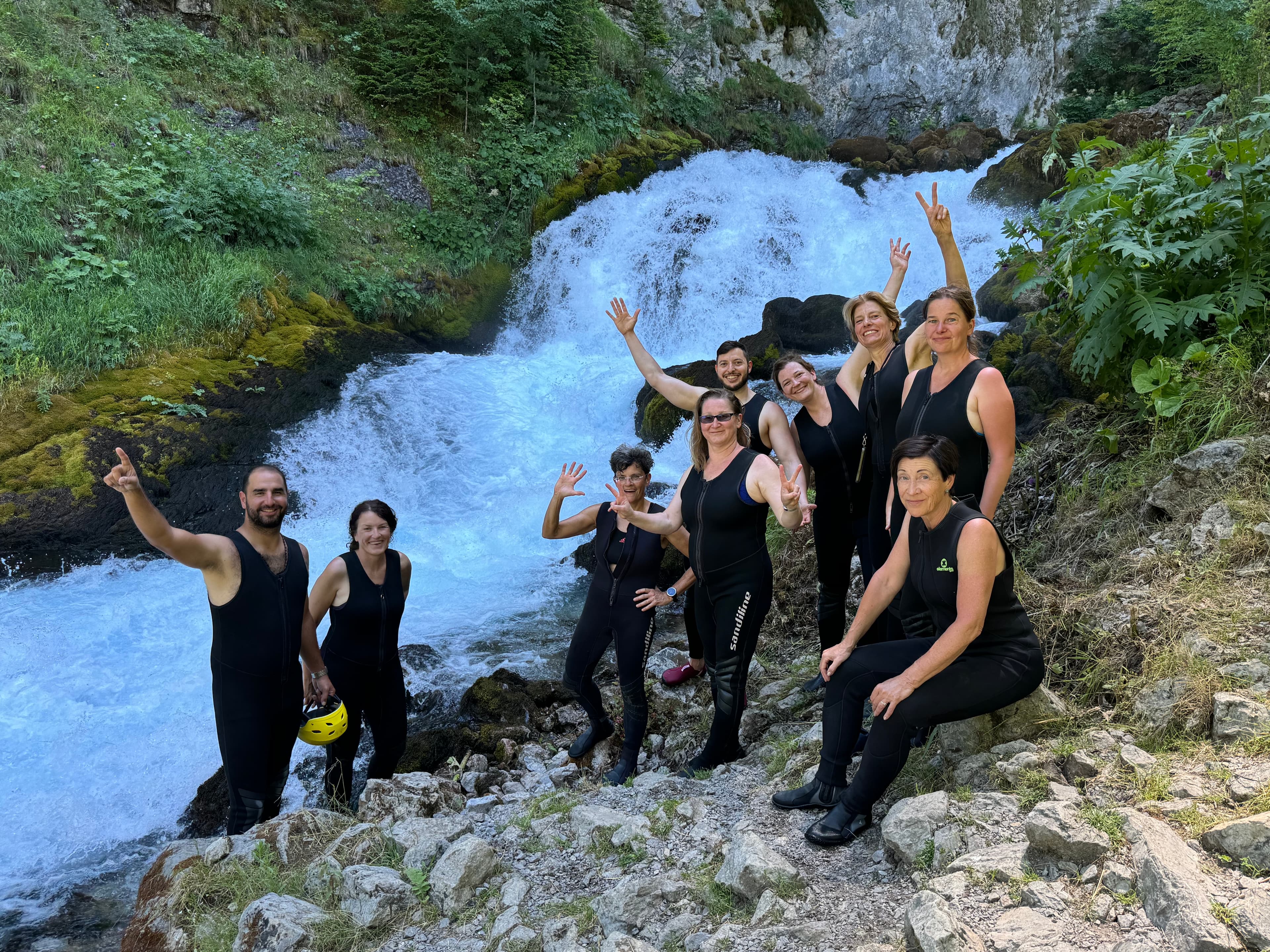
9 days · Cycling
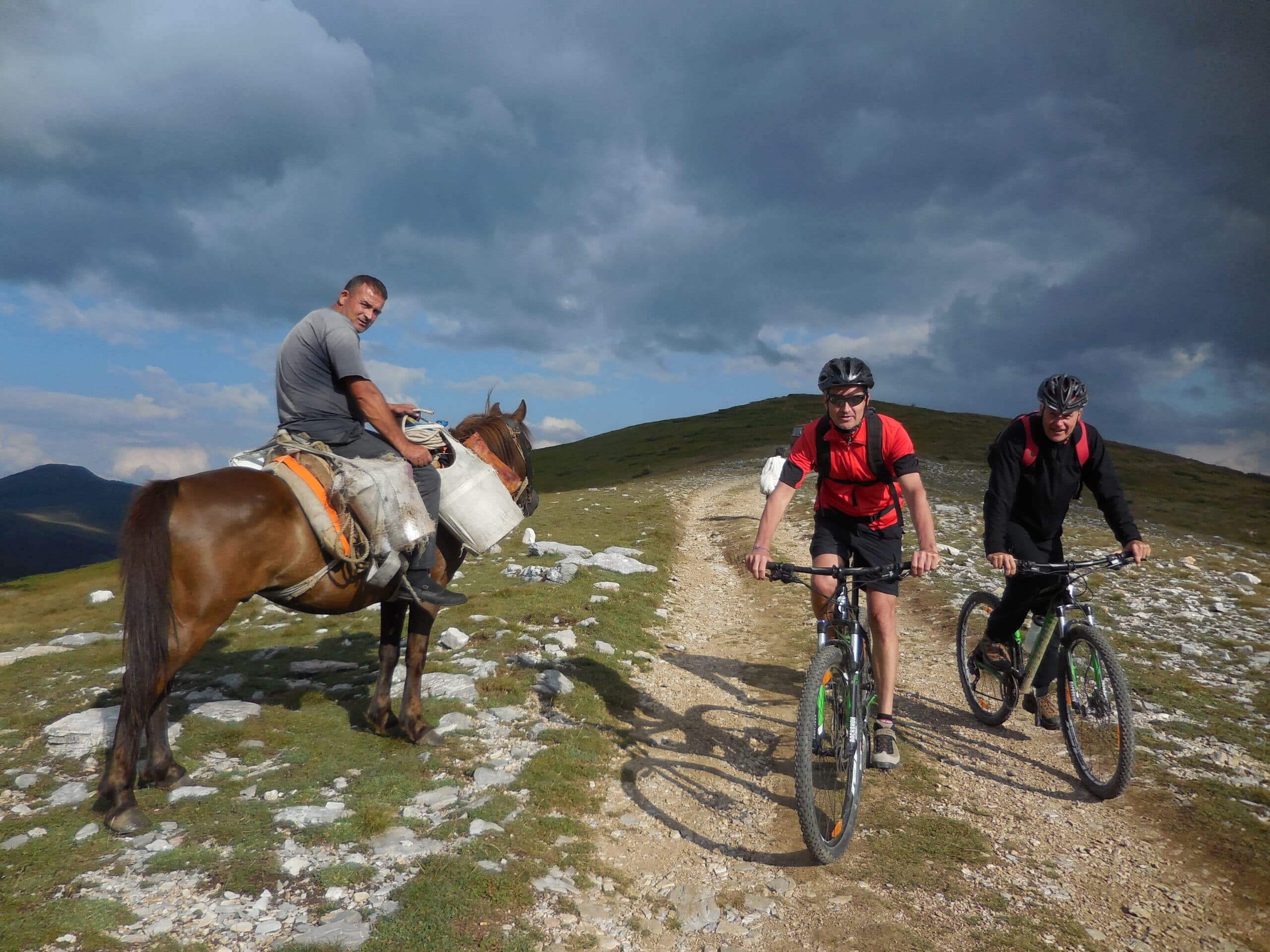
8 days · Cycling
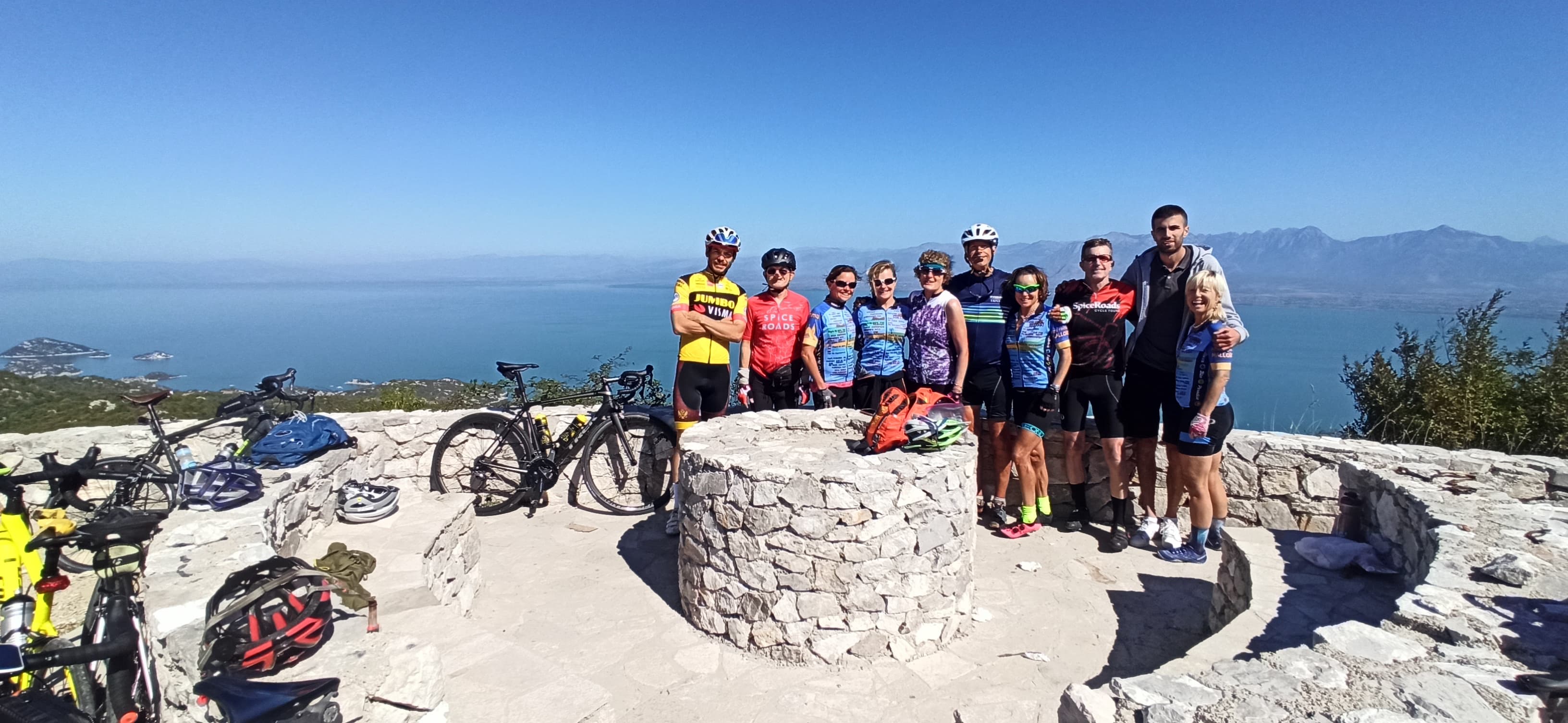
7 days · Cycling
7 days · Cycling
1 day · Multi-activity
from € 160,- / per person
Meet your guides
We live in Stari Bar. We walk these trails, ride these roads and eat in these konobas every week. When you book with us, you’ll usually speak directly to one of the people who’ll be guiding you.
Meet the whole team →
Management
Quality assurance, sales and communication.

Management
Product development, sustainability and marketing.

Tour operations manager
Backoffice — keeps every trip running smoothly on the ground.

Reservations & group tour operations
Backoffice — bookings, group logistics and guest care.
Tell us roughly when, who's travelling and what kind of pace you like. We'll send back a draft itinerary within 1–2 days, no payment until you're happy with the plan.
Plan your trip