


Cycling
How Long the Cetinje–Rijeka Crnojevića Descent Really Takes by Bike
ByThe 3E Travel team · · 7 min read

A ~579 m drop over roughly 17 km, where the brakes start to matter, and the konoba at the bottom that doesn't open until 11:00. Here's how the run actually plays out.
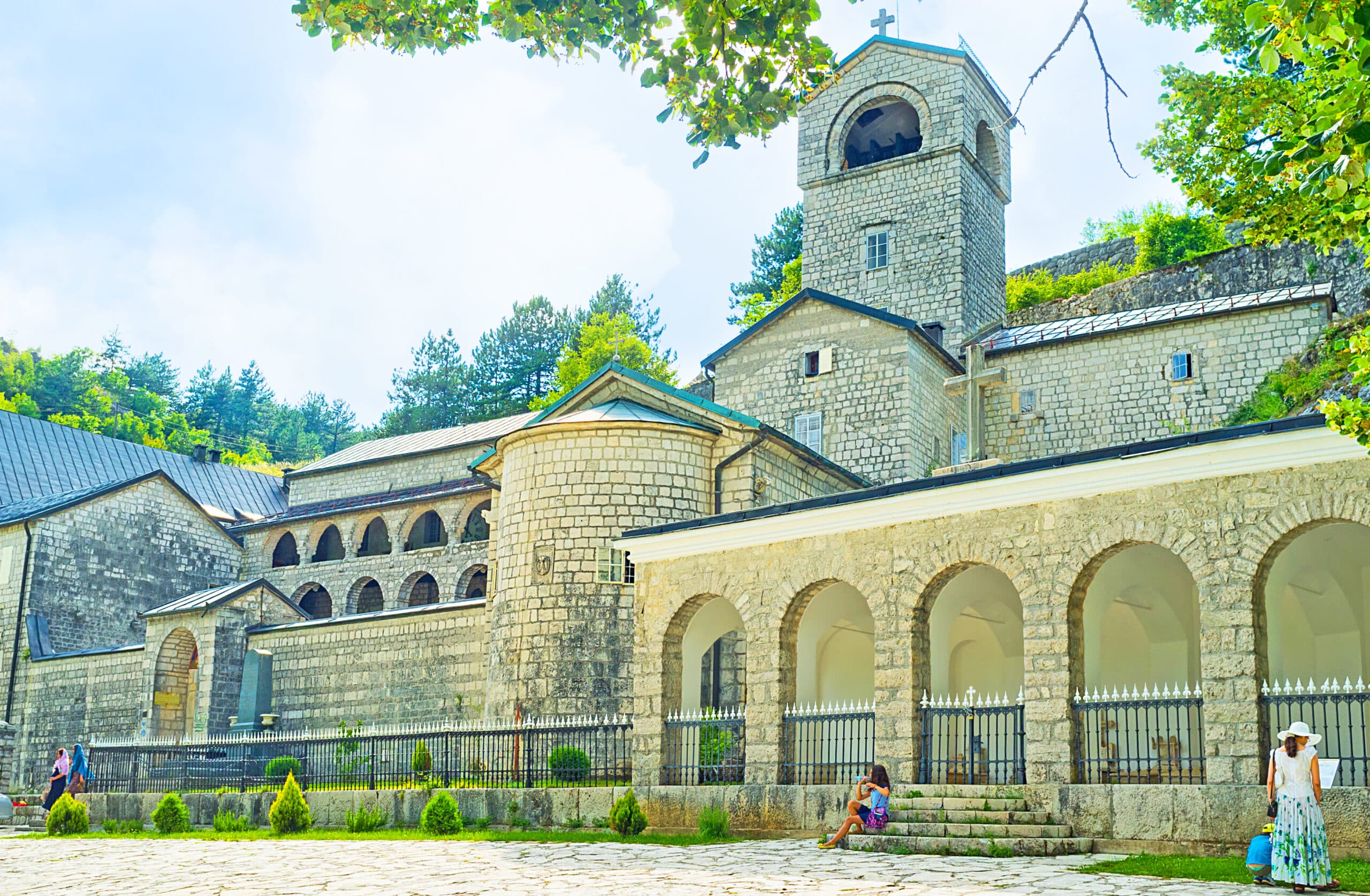
The honest answer is 40 to 55 minutes rolling, not the 25 a car calculator suggests. Cetinje sits at 650 m. Rijeka Crnojevića sits at 71 m. That's a net drop of about 579 m over roughly 17 km of the direct road, and almost none of it is flat. You're not pedalling much. You're managing speed, your hands, and your brakes.
We run this as a half-day descent with clients who want scenery without suffering. It's one of the few routes in Montenegro where the hard part is going down, not up. Below is how it actually unfolds, stop by stop, with the places where the surface changes and the one timing rule that catches people out at the bottom.
The numbers, and why the 25-minute figure lies
You'll see two distances online. A driving calculator gives 16.7 km and 25 minutes at 40 km/h average. A regional guide quotes ~30 km / 30 minutes — that figure takes the old road and the spur up to Pavlova Strana, so ignore it unless you're deliberately detouring. The direct descent into the village is the ~17 km one.
A car holds 40 km/h on blind limestone switchbacks because it brakes late and corners hard. You won't, and shouldn't. On a loaded touring or e-bike, a sane line through the bends lands you nearer 22–28 km/h average. Add two or three photo stops and you're comfortably in the 45-minute range. That's the real budget. Anyone selling you 'half an hour' is reading a satnav, not riding.
Cetinje → Rijeka Crnojevića: car figures vs. what a bike actually does
| Measure | Car calculator | Bike (realistic) |
|---|---|---|
| Distance (direct road) | 16.7 km | ~17 km |
| Elevation change | −579 m | −579 m |
| Rolling time | 25 min | 40–55 min |
| With 2–3 photo stops | n/a | 60–75 min total |
Where the brakes start to matter
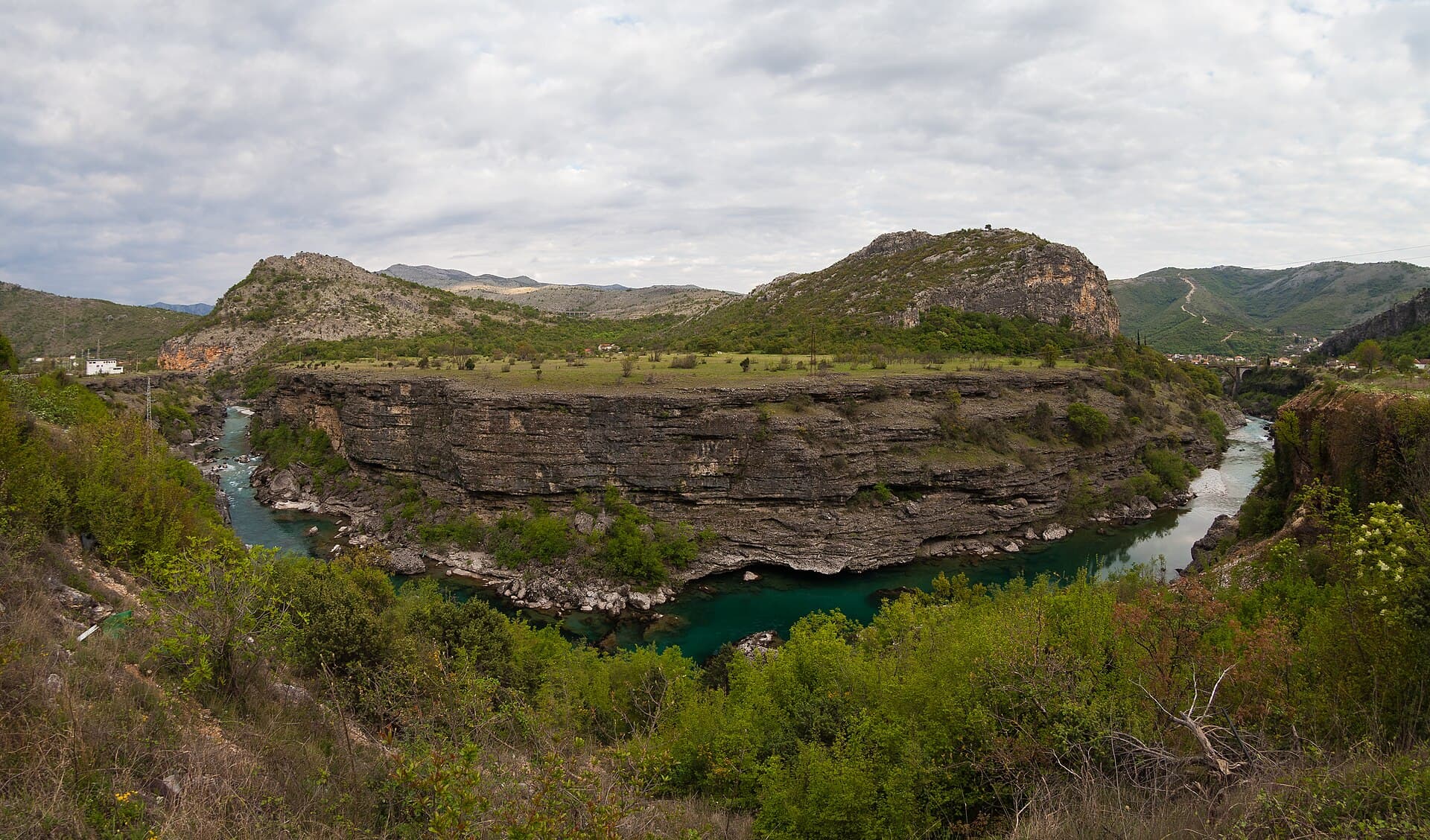
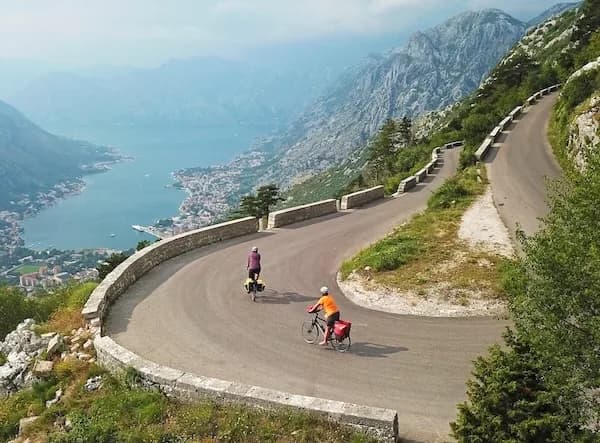
The gradient is relentless rather than terrifying. You lose most of the altitude in the middle third, where the road tightens into the Crnojević gorge and the forest closes overhead. This is the section where rim brakes on an older hire bike get hot and start to fade. Disc brakes shrug it off. If you're on anything with cantilevers, feather them in alternating pulls — grab-and-release — rather than dragging one brake the whole way down. Dragging is what glazes pads and boils fluid.
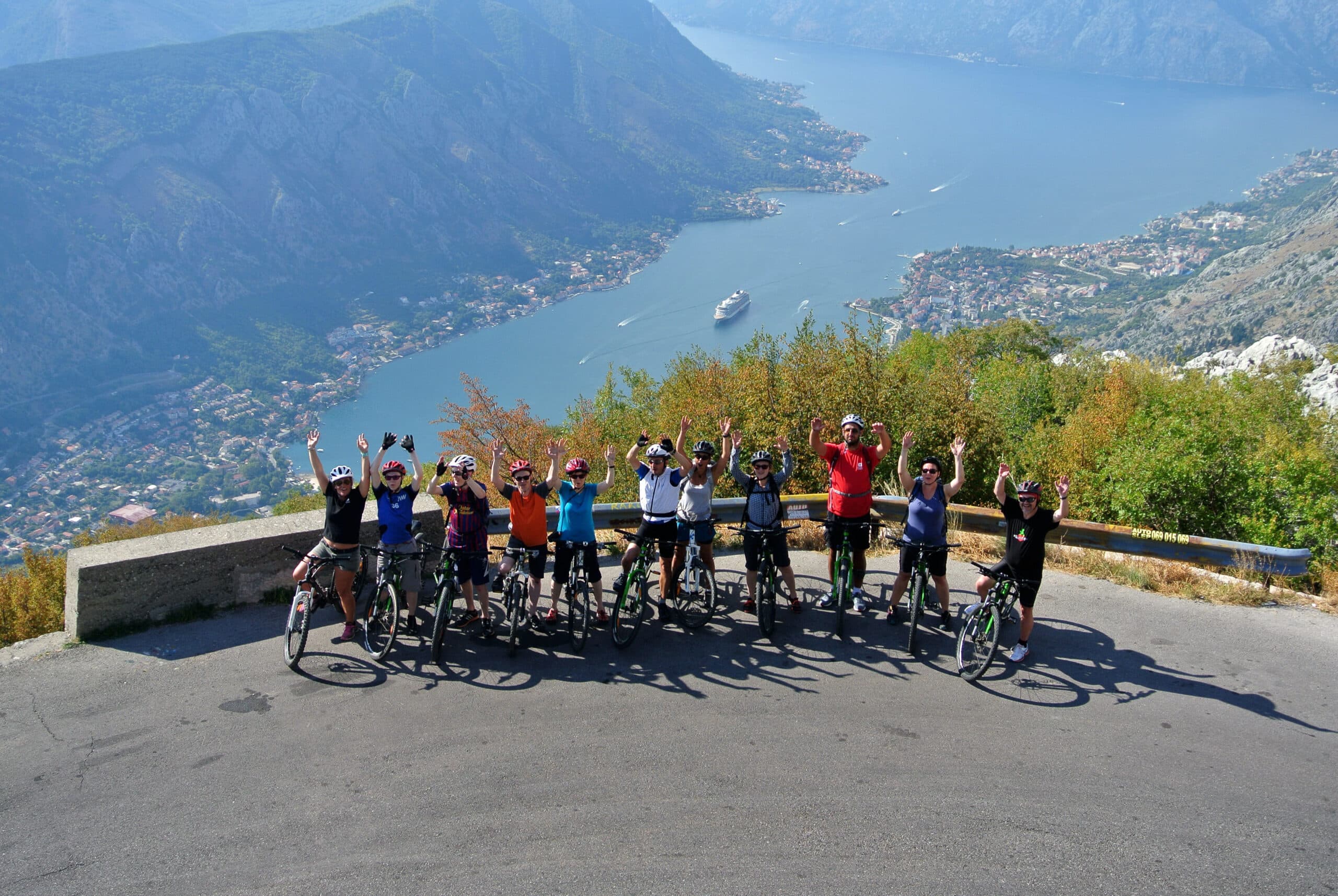
We tell clients to stop once, deliberately, about two-thirds down where the valley first opens below you. Not just for the view — it lets the rims cool and your hands unclench. On a hot July afternoon I've put a hand near a client's front rotor at that point and felt the heat off it from a few centimetres. That's normal. Riding the next kilometre without a pause is how people cook a brake.
Where the tarmac breaks up
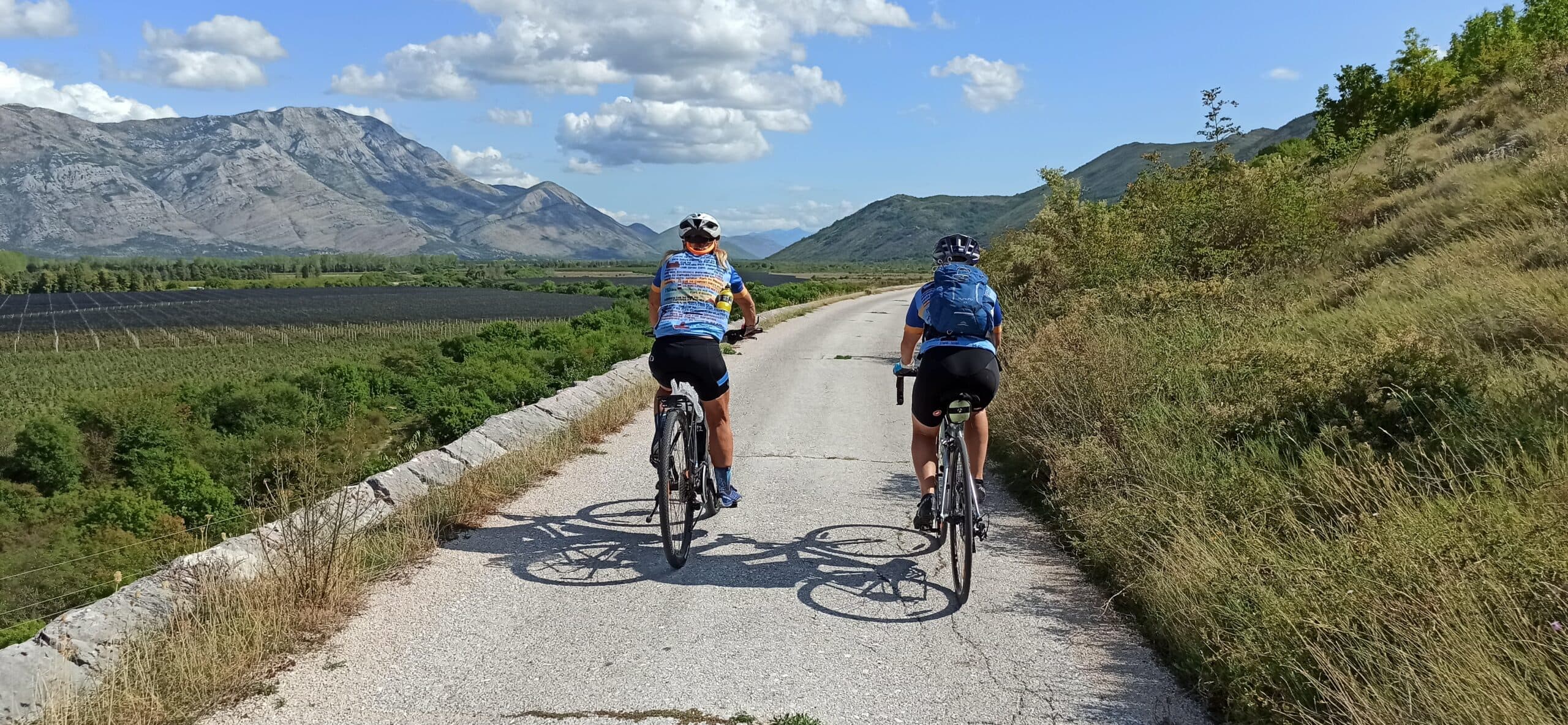
The main descent road is paved the whole way into the village — the gravel most guides warn about is that Pavlova Strana spur, not your route. What does catch you out is edge break-up: the tarmac frays at the margins on the tighter outside bends, and there's loose grit washed across the road after rain in the shaded gorge section where it dries slowly. Hold a line a metre off the edge through the switchbacks and you'll miss most of it. [3E TO CONFIRM: exact km markers where our guides flag surface break-up on the client runs].
Traffic is light. This isn't a transit corridor — locals call the old mountain road scenic and pointless for getting anywhere, which keeps it quiet. From 15 June to 15 September 2026, Montenegro bans heavy goods vehicles over 7.5 tonnes on key Cetinje-area routes during weekday and weekend evenings, so summer late-afternoon descents see even fewer trucks. No closures or washouts were reported on this road through 2025–26.
The konoba at the bottom opens at 11:00 — plan around it
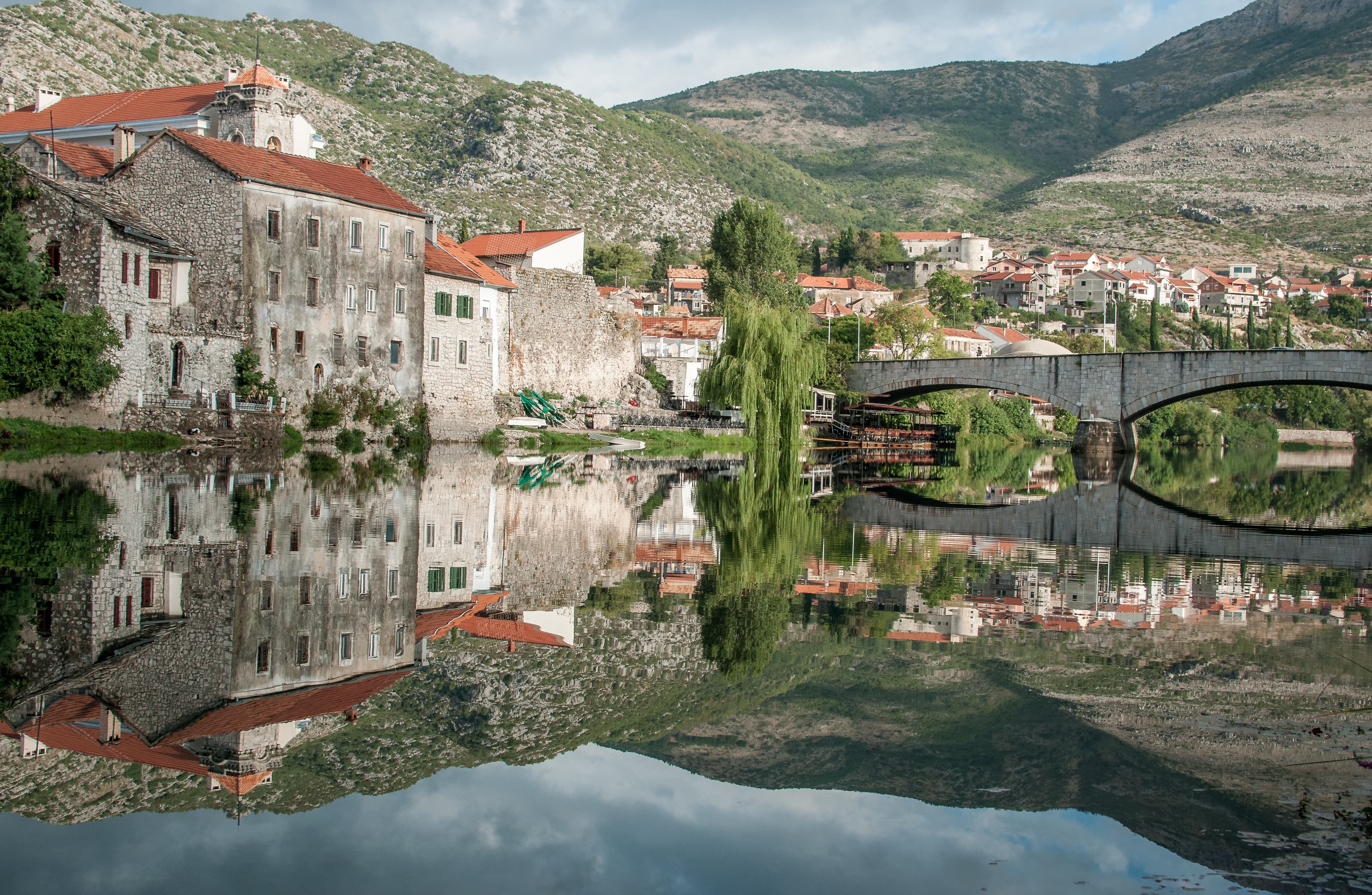
This is the detail that decides your whole morning. Both riverside konobas in the village open at 11:00, not earlier. Stari Most (ranked the village's best, Mediterranean and European, vegetarian-friendly) runs 11:00–18:00 daily. Konoba Mostina — named after the old stone house Prince Danilo built beside the bridge — opens 11:00 and stays until 22:00, with outdoor seating.
So don't leave Cetinje at 09:00 thinking you'll have an early lunch by the river. You'll arrive to shuttered doors and a 45-minute wait. Our guides start the descent to land at the bridge around 11:15 — late enough that the kitchen's open, early enough to beat the day-trip coaches from the coast. If you want the longer, lazier lunch, Mostina is the one; Stari Most shuts its kitchen in the late afternoon.
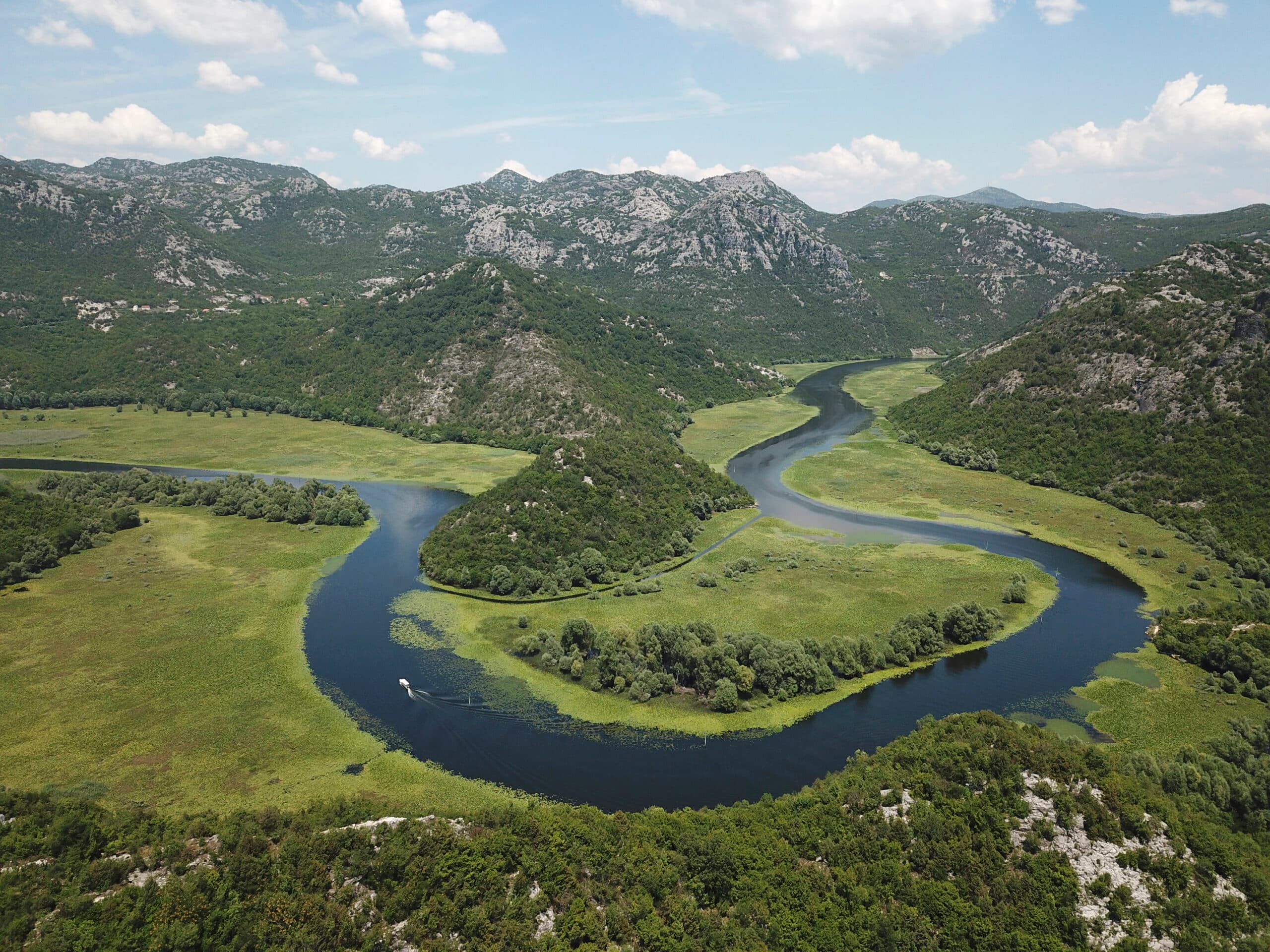
The bridge itself is worth five minutes. It's Danilo's Bridge, 43 m long, built 1853 in memory of the prince's father. The village was briefly the capital of Montenegro and home to the oldest printing press in the South Slav lands, dating to 1493. For a place of 175 people, it carries a lot of history.
National park fee and the boat question
Rijeka Crnojevića sits inside Lake Skadar National Park. The park charges €5 per person per day in 2026, or €13.50 for an annual pass covering all Montenegrin national parks. The catch — and it works in cyclists' favour — is that payment is collected at the visitor centres in Virpazar and Vranjina, not on the Cetinje descent road. Ride through and you're unlikely to be charged; if you plan to join a boat, buy the pass properly.
Boat tours leave from the village on Lake Skadar, but don't expect a timetable. Operators here work informally — you ask at the waterfront rather than reading a posted schedule. Short charters start around €8 per person; a longer three-hour cruise runs nearer €40–45. Budget an extra 1.5–3 hours if you add one, and accept that the departure is whenever the boatman is ready.
How long does the Cetinje to Rijeka Crnojevića bike descent take?
Budget 40–55 minutes of rolling time for the ~17 km direct road with its 579 m drop, or 60–75 minutes including a couple of photo stops. Car calculators say 25 minutes — ignore that; you'll be managing brakes on switchbacks, not averaging 40 km/h.
Is the road to Rijeka Crnojevića paved for cycling?
Yes, the main descent from Cetinje is paved the whole way into the village. The unpaved section people mention is the final ~1 km up to the Pavlova Strana viewpoint, which is on a separate spur off the old road — not your descent route.
What time do the restaurants in Rijeka Crnojevića open?
Both riverside konobas open at 11:00 daily. Stari Most runs 11:00–18:00; Konoba Mostina runs 11:00–22:00. Arrive before 11:00 and nothing will be open, so time your descent to reach the bridge around 11:15.
Do I need to pay the Lake Skadar National Park fee if I'm just cycling through?
The €5/person/day fee (or €13.50 annual pass) is collected at the Virpazar and Vranjina visitor centres, not on the Cetinje road. Cyclists passing through the village are generally not charged, but you'll need to pay if you join a boat tour.
Can I cycle back up from Rijeka Crnojevića to Cetinje?
You can, but it's a sustained 579 m climb over ~17 km — a serious effort in summer heat. Most riders arrange a shuttle up or build the descent into a point-to-point route rather than riding it as an out-and-back.
Leave Cetinje around 10:20, ride the descent unhurried, cool your brakes two-thirds down, and roll onto the bridge just as the konoba kitchens open. That's the whole trick to this one: it's an easy half-day if you respect the gradient and the opening hour, and a frustrating one if you don't.
Written by
The 3E Travel team